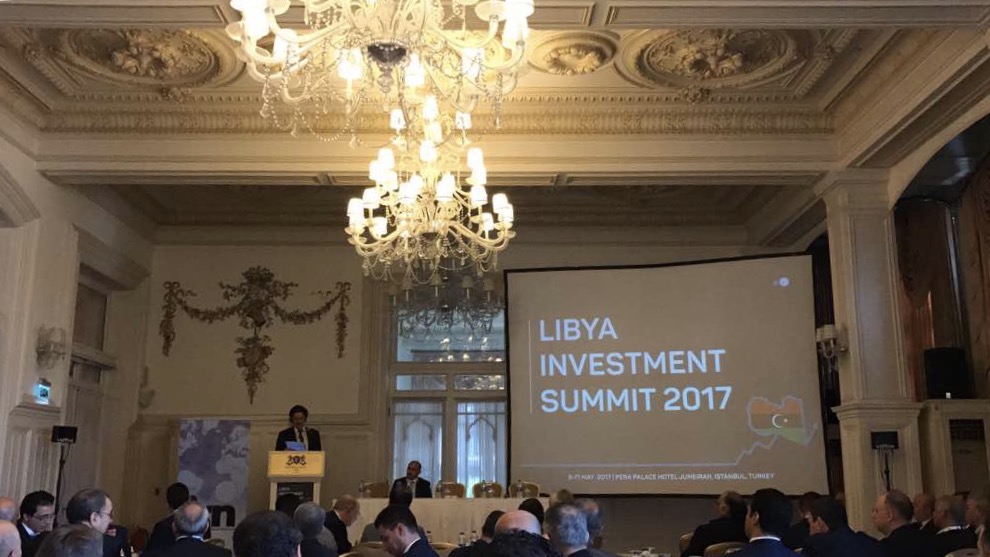
This year, we are excited to sponsor the Libya Investment Summit 2017 which is scheduled to take place at Pera Palace in Istanbul, Turkey on May 9 to 11. This summit addresses several opportunities for investment in construction, engineering, hydrocarbon and banking sectors; specifically on how the concerned sectors and regulators can work together to enable innovation.
Representing Eldib & Co at the conference are Mr. Amr Eldib, our Managing Partner, as well as Mr. Khaled Aljazwi, Head of our Libya office. The program will include Panel Discussions, Presentations and Breakout Sessions. The event will also develop business in Libya and considering their options with the appropriate companies to provide a mutual understanding within the current situation and crisis worldwide. Mr. Eldib commented on today’s event, by describing it as “a vital step to reviving and rejuvenating the Libyan economic and legal infrastructure, which we predict is going to be a regional economic power as soon as stability returns to Libya, given Libya’s vast resources and strategic positioning in the African continent and the Mediterranean Sea.” Kindly contact libya@eldibold.stg.xlabgroup.com or mail@eldibold.stg.xlabgroup.com should you have any enquiries or comments related to Libya and its legal framework.Category: latest news
Egypt: Jurisdiction Update
The State Council has dispatched the new investment draft law back to the cabinet for reconsideration of its conclusions relating to some of the provisions on the bill. Article 51 of law No. 17 of 2015, states clearly that the General Authority for Investment and Free Zones (GAFI) is the only responsible party to offer available land for investment which includes representatives of the landowners in the process. The State Council added that articles 53 to 67 did not determine the entitled authority to terminate the final contract for real estate investment.
The government approved the movement of tax laws, including the recent application of the Value Added Tax (VAT) Law and the Law to End Tax Disputes.
In addition to drafting amendments to the Income Tax Law, in order to defer applying the tax on capital gains for three years, after the Supreme Council for Investment approved the deferment decision and added tax incentives to the Investment Law, which were approved by the cabinet.
The Presidential Decree No. 89 of 2017 was issued by President Abdel Fattah Al-Sisi to establish the National Council for Payments under his chairmanship. The council will work to decrease the use of banknotes outside the banking sector, support and encourage the use of electronic payments, and develop national payment systems and their supervision frameworks to lessen the risks associated with them.
Egypt – New Amendments to Importation Law
Amendment to Importation Law
On March 7, 2016, the Arab Republic of Egypt witnessed major amendments to Law No. 121 of 1982 through the implementation of Law No. 7 of 2017.
According to key amendments of article 2 of the amendments, the registration of natural persons requires:
- Individuals to be Egyptian nationals
- Having been engaged in business for at least two consecutive years prior to applying for registration; this can be proved with a certificate from the competent Chamber of Commerce approved by the General Union of Chambers of Commerce. The minimum volume of business in the last year, as indicated in the tax return submitted to the Tax Authority, shall not be less than EGP 2,000,000. Holders of an importation license, at the time of issuance of this law, shall be exempted from such requirement.
- When applying for registration, the amount of capital indicated in the commercial register shall not be less than EGP 500,000
- Holders of importation licenses, at the time of issuance of this law, shall reconcile their conditions within six months in accordance with provisions of this law and the implementing regulations to be issued within six months of the effective date of the law.
- Company to be registered in the commercial registry. Partnerships and limited liability companies should have been registered in the commercial registry for at least one year. The minimum volume of business in the last year, as indicated in the tax return submitted to the Tax Authority, shall not be less than EGP 5,000,000. Companies which hold import licenses shall be exempted from such requirement at the effect date of the implementing regulations of this law
- The paid capital of the partnerships and limited liability companies shall not be less than EGP 2,000,000
- The issued capital of the joint stock companies and partnerships limited by shares shall not be less than EGP 5,000,000. 51% of the shares of the partners in the joint stock companies, partnerships limited by shares, limited liability companies and partnerships must be owned by Egyptians. Companies which hold importation licenses, at the time of issuance of this law, shall reconcile their conditions in accordance with the provisions of this law within six months of the effective date.
Increase of Patent Examination Fees in Egypt
Please be advised that the President of the Academy of the Scientific Research and Technology has issued a new Executive Decree, No. 1 of 2017, which has increased the examination fees for patents in Egypt (Attached herein with English translation).
In accordance to the attached Executive Order No. 1 of 2017 and associated announcement, the cost for patent examination shall be the equivalent of USD 1,000.00 in accordance to the exchange rate at the time of the executive order`s issuance.
Please be advised that the equivalent of USD 1,000.00 on 13 February, 2017 (the issuance date) is EGP 17,530.00 and this rate shall be subject to review on an annual basis.
Eldib & Co will make sure to provide you with the equivalent EGP 17,530.00 in USD at the time of the examination fees` payment.
Please bear in mind that the exchange rate has been fluctuating recently; for example, the equivalent of EGP 17,530.00 in USD on 13 February, 2017 was USD 1,000.00 and has rose to USD 1,094.00 as of today, 22 February, 2017.
We shall keep you updated with the latest developments and kindly send your queries in this regard patents@eldibold.stg.xlabgroup.com.
Mandatory GOEIC Registrations for Importing Products into Egypt
Egypt’s Ministry of Trade and Industry issued decree 43 for the year 2016, on January 16th, amending the rules organizing the registration of factories qualified to export listed products to Egypt.
The new decree requires factories and companies, who own trademarks in Egypt, to export listed products and to register their trademarks with the General Organization for Export and Import Control (GOEIC). A Ministerial decree concerned with foreign trade; however, will be issued where they may exempt any or all registration conditions determined thereby.
The decree that is based on the proposition of trade agreements and foreign trade shall come into effect two months after the date of its publication and will, in turn, cancel all previous decrees contradicting the provisions of this Decree.
As a global law firm with Egyptian roots, Eldib & Co is ready to provide assistance to our clients throughout the registration process and all the related procedures. Relying on its extensive expertise across a multitude of sectors, Eldib & Co can offer comprehensive and precise advice covering corporate and commercial matters; ensuring highest standards and proficient service.
Commodities to be released for trade purposes under condition of being the production of registered factories, or being imported from companies, owners of trademarks, or their distribution centers are as follows:
Decree 43 for the year 2016 will be enforced starting the 16th of March, 2016. Eldib & Co invites you to send all your queries, in regards to the required documents or any other questions, to mail@eldibold.stg.xlabgroup.com or trademarks@eldibold.stg.xlabgroup.com
| No. | Commodity |
| 1 | Milk and dairy products (except for children milk), not exceeding 2 kg |
| 2 | Preserved and dried fruits prepared for retail sale, not exceeding 2 kg |
| 3 | Oils and greases prepared for retail sale in packs, not exceeding 5 kg |
| 4 | Sugar products |
| 5 | Chocolates and other food items that include cocoa prepared for retail sale, not exceeding 2 kg |
| 6 | Dough and foods prepared for cereals, bread products, and baked goods |
| 7 | Fruit juices prepared for retail sale in packs not exceeding 10 kg |
| 8 | Fresh/ mineral waters and soft drinks |
| 9 | Cosmetics and oral or dental care products, deodorants, bathing products and perfumes |
| 10 | Soap and detergents, prepared for retail sale |
| 11 | Table, eating, and kitchen utensils |
| 12 | Tubs, basins, wash-basins, toilet seats, toilet covers and other sanitary products |
| 13 | Sanitary paper, cosmetic paper, diapers, towels and table cloths |
| 14 | Floor and wall tiles |
| 15 | Glass items for table and kitchen use |
| 16 | Reinforcing steel |
| 17 | Household appliances (refrigerators, ACs, fans, washing machines, electric water heaters, televisions, radios, etc…) |
| 18 | Home and office furniture |
| 19 | Bicycles and motorbikes |
| 20 | Watches |
| 21 | Light sets for household use |
| 22 | Toys for children |
| 23 | Furniture, except that used for professional protection, diving and medical uses |
| 24 | Rugs, floor and wall coverings, and textile and non-textile rugs |
| 25 | Shoes |
Africa Rising
In recent years, Africa has faced numerous challenges, and is still facing difficult times; however, the continent still poses an investment destination. This year, the African Economic Summit took place in the Red Sea’s coastal city of Sharm El Sheikh in Egypt, between February 19th and 21st, 2016. “Africa 2016” hosted 1,200 delegates who discussed how to attract private sector opportunities and build a 26-nation free trade deal signed last year to establish a common market.
Delegates, for two days, discussed pushing forward the economy of the continent that accounts for 2% of world trade, despite having an economic growth rate of more than 4%. Eldib & Co attended the grand event at Sharm El Sheikh, where they were one of a select few law firms attending from Egypt. The forum was aimed at “pushing forward trade and investment in our continent to strengthen Africa’s place in the world economy”, Egyptian President Abdel Fattah El Sisi said during his opening remarks. President Abdel Fattah El Sisi said that the conference aimed to present investment opportunities in Africa and create a direct communication channel between African businessmen and overseas investors.
Promoting investment is one thing that will lead to extending Eldib & Co’s services to new areas of practice and fields. This will allow Eldib & Co to extend their services to potential investors who would like mergers or acquisitions or consultation regarding contracts from different countries within or outside the continent.
“Africa 2016 forum is expected to position Egypt as a gateway for foreign investments into African markets,” Omar Ben Yedder, a member of the organizing committee, told AFP. There are high hopes that African investors lead the growth process through developing the continent’s infrastructure.
“When our own people invest then other investors get convinced,” said Sindiso Ngwenya, head of COMESA. The private sector’s role will be very important in addressing energy challenges, where 645 million people in the continent do not have access to electricity. “We plan to invest 12 billion dollars in the energy sector over the next five years… so that people in Africa can have universal access to electricity,” Africa Development Bank president Akinwumi Adesina said. Africa’s economy is expected to grow 4.4 percent in 2016 and 5% in 2017 versus 3% growth expected in developed countries.
Trademarks & Patents Registrations
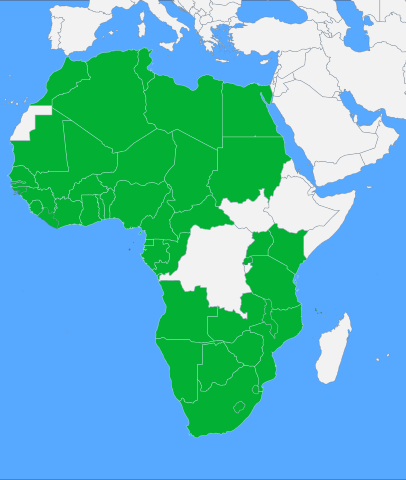
Eldib & Co is pleased to announce the latest expansions that have taken place. We have extended our IP services to more than 40 countries within the continent:
Algeria, Angola, Benin, Botswana, Burkina Faso, Cameroon, Central African Republic, Chad, Comoros, Congo, Egypt, Equatorial Guinea, Gabon, The Gambia, Ghana, Guinea, Guinea-Bissau, Ivory Coast, Kenya, Lesotho, Liberia, Libya, Malawi, Mali, Mauritania, Morocco, Mozambique, Namibia, Niger, Nigeria, Rwanda, São Tomé and Príncipe, Senegal, Sierra Leone, South Africa, Sudan, Swaziland, Tanzania, Togo, Tunisia, Uganda, Zambia and Zimbabwe.
We shall have the pleasure of assisting you with existing and upcoming matters. Should you wish to receive our schedule of fees for a specific jurisdiction, please contact us atKuwait – New 2016 Official fees for the Enactment of Trademarks
Kuwait – New 2016 Official fees for the Enactment of Trademarks
In the wake of the new year, the Kuwaiti Trademark Office have decided to implement the new official fees for all Trademark procedures as per their December circular, 13/2015. These developments and application of new fees are results of the 33rd Summit for the Supreme GCC Council, in their attempts to implement a unified GCC Trademark Law. However, it is important to note that the GCC Trademark Law exists only to unify the procedures across the GCC States. Said decree was published and released in the Kuwaiti Official Gazette on 27 December, 2015 and is the applicable decree for all trademarks filed on this date as well as retroactively pending applications.
Eldib & Co invites you to send all your queries, in regards to Kuwait or any other jurisdiction in the MENA region, to mail@eldibold.stg.xlabgroup.com.
| Service | Updated Official Fees |
| Publication in the official Bulletin for a Trademark in One class | US $82.00 |
| Trademark Filing in One Class | US $148.00 |
| Renewal Publication of a Trademark in One Class | US $148.00 |
| Filing opposition against a Trademark | US $314.00 |
| Registration and issuance of certificate for a Trademark in One Class | US $792.00 |
| Renewal of a Trademark In one Class during last year of validity | US $874.00 |
| Renewal of a Trademark In one Class during last six month validity period | US $1023.00 |
Eldib & Co announces new partners
Eldib & Co, Egypt’s most experienced full service law firm, has announced the promotion of four new partners.
Mostafa Eissa joined the firm in 1988, and he has assisted in both the patent and trademark departments before specialising in patent registration. In cooperation with our IP division, Mostafa assisted in the development of several applications that modernise and simplify the annuities payments and processing for patents. Mostafa mainly handles prosecutions, oppositions, filings at the Patent Office, and appearing before the Patent Office to secure the client’s best interest. Mostafa now heads Eldib & Co’s Patent Department.
Dina Eldib joined the firm as a qualified trademark agent in 2011. She brings to the firm her strong background in economics, advertising, brand management and new media solutions as well as her global knowledge of branding and corporate identities. She is responsible for the registering of trademarks and industrial designs. Dina handles many trademarks for multinational companies and assists with the registration of marks and the negotiations of deals pertaining to IP rights both locally and internationally.
Marwan Eissa joined Eldib & Co in 2009, specialising in the field of Intellectual Property where he has extensive experience handling high profile multinationals. In the field of IP law, he is able to provide legal support, conduct clearance trademarks’ searches and investigations, register national and international trademarks, deal with refusals and oppositions of registrations, and file appeals/oppositions and counter-statements. He acts as an advocate and trademark attorney for major clients, small businesses, corporations, and multinationals.
Mohamed Wahba joined Eldib in 2000 and became the head of Criminal litigation department in 2004. Mohamed was admitted before the Egyptian Court of Cassation in 2010. Since joining Eldib, Mohamed has dealt with a wide range of business crime matters. He has particular expertise in criminal cartels, extradition, corruption, mutual legal assistance. Mohamed handled high-profile cases for different individual and multinational clients within his areas of practice which includes: Criminal appeals, criminal defence, drug crimes, felonies, forgeries, misdemeanours, money laundering, and weapon charges.
Please join us in congratulating our new partners for their immense efforts.
New Regulations for Investment
New Regulations for Investment, Guarantee and Incentive Laws
Egypt’s Prime Minister has recently issued a decree, no. 1820 of 2015, modifying Investment, Guarantees and Incentive laws. Said modifications have been introduced to ease foreign investment and to increase competitiveness in the Egyptian investment climate.
One of the many changes that took place is that the Financial Control Authority now have the right to issue a decision to regulate the rules, conditions and procedures of any factoring activities and Monetary Supply with the aim to accommodate foreign and local investment. Furthermore, it is now possible to convert your company’s capital from EGP to any free exchangeable currency through specific procedures and applications. On the same basis, regulations and standards comparing applicants have been added and the availability of the required permits shall be granted based on the the company’s total investment, background experience and the kind of technology used.
It is also to be noted that certain articles have been amended to support the aforementioned motive of these modifications. According to Article 31, appeals challenging the decree of tax exemption cancelations must be submitted within 30 days of the decree’s issuance. While Article 35 now states that unified custom class on machines, equipment, devices and production lines are now 2% rather than 5%. Another significant amendment occurred in Article 40; transient goods are now exempt from fees when imported into the free zones.
This decree also took the opportunity to add new chapters of legislation and which further support the investment culture that Egypt is aiming to implement in the near future. A new chapter on Investment Policy was issued and it discusses the methods of application through the free zones, as well as the licenses, rules and regulations required for establishing in said zones. In addition, a new chapter on Land and Real Estate regulations indicates that the administrative authorities are now obliged to submit detailed maps to the general authority in order to ease related investments. These maps must identify the lands’ estimated value as well as which lands are up to the Republic’s standards in terms of fulfilling investment criteria. Finally, an alternative method to challenge the General Administrative Authority for Free zones and Investments’ decisions has been imposed. Formerly, the authority used to be the litigant and the judge. Now, with the presence of a neutral committee, GAFI’s decisions are now regarded as comprehensive decisions.